What Do You Put in a Food Pacifier? A Parent’s Guide to Safe and Healthy Use
A food pacifier, often called a baby food feeder or silicone feeder, is a popular tool for introducing infants to solid foods or soothing teething discomfort. But many parents wonder: What exactly should you put in a food pacifier? And more importantly, how can you ensure it’s used safely? In this guide, we’ll break down the best practices for using a food pacifier and highlight key features to look for—including the benefits of choosing a silicone-based design.
What Can You Safely Put in a Food Pacifier?
Food pacifiers are designed to hold small pieces of soft, fresh food while allowing babies to gnaw and suck without choking risks.
Ideal options include:
Fruits: Chilled banana slices, ripe mango, steamed apple, or peeled avocado.
Vegetables: Steamed carrot sticks, cucumber (peeled and deseeded), or soft-cooked sweet potato.
Teething Soothers: Frozen breast milk cubes or unsweetened yogurt (for older babies).
Avoid hard, sticky, or overly fibrous foods (e.g., raw carrots, nuts, or dried fruit) that could break off into chunks or pose a choking hazard.
Why Material Matters: The Case for Silicone?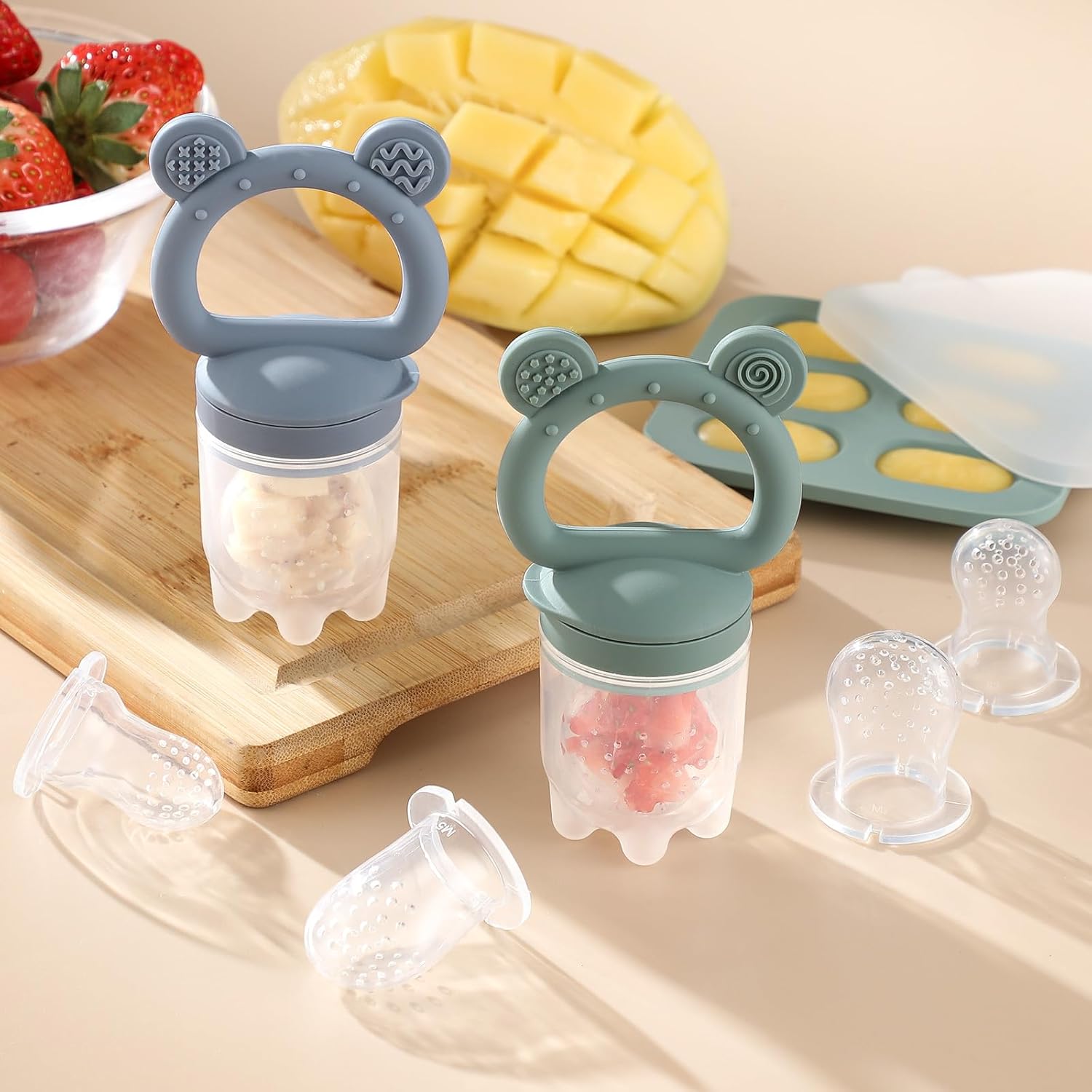
When selecting a food pacifier, material safety is critical. Many modern feeders use food-grade silicone for good reason:
Safety: Silicone is non-toxic, BPA-free, and gentle on sensitive gums.
Durability: It withstands repeated use, boiling, and freezer temperatures.
Hygiene: Silicone’s smooth surface resists bacteria buildup and is easy to clean.
While mesh feeders were once common, silicone alternatives are increasingly preferred for their ease of maintenance and long-term reliability.
How to Use a Food Pacifier Safely?
Size Matters: Cut food into pieces small enough to fit securely inside the pacifier’s compartment.
Supervise Always: Never leave a baby unattended while using a feeder.
Clean Thoroughly: Disassemble and wash the pacifier after each use—silicone’s dishwasher-safe properties simplify this step.
Choosing the Right Design
Look for a silicone feeder with:
A secure locking mechanism to prevent spills.
Multiple texture points to massage gums during teething.
An ergonomic handle for easy gripping by small hands.
Subtle design details like these enhance safety and functionality without overwhelming parents with technical jargon.
Final Tips for Parents
A food pacifier can be a valuable tool for transitioning to solids or easing teething pain—if used correctly. Prioritize fresh, soft foods and opt for a high-quality silicone model to ensure safety and longevity. Always consult your pediatrician if you’re unsure about introducing new foods or tools to your baby’s routine.


