In the wonderful world of baking, we are always exploring new tools and methods to improve the efficiency and fun of baking. Silicone molds, with their unique materials and characteristics, have gradually entered the kitchens of many baking enthusiasts in recent years. But a question also arises: Can I bake directly in silicone molds? This question not only troubles many novice bakers, but even some experienced veterans will have doubts. After all, baking directly in silicone molds is related to food safety and baking results, and there is no room for carelessness. Next, let's explore this issue in depth to clear up this doubt for your baking journey.
🔍 Silicone material secrets
Silicone, full name "polysiloxane", is a synthetic polymer composed mainly of silicon, oxygen, carbon and hydrogen elements. From a chemical structure point of view, it uses silicon-oxygen bonds (Si-O) to form the main chain. This unique structure gives silicone many excellent properties.
Silicone has excellent temperature resistance, which is also one of the key characteristics that allows it to stand out in the baking field. Generally speaking, the temperature resistance range of ordinary silicone is around - 40℃ to 160℃, while the temperature resistance range of food-grade silicone used for baking molds is usually - 40℃ to 250℃, and even some high-quality food-grade silicone can withstand higher temperatures. This means that at regular baking temperatures, silicone molds will not deform or melt due to high temperatures, and can function stably. In addition to temperature resistance, silicone also has good flexibility and elasticity, just like a flexible elf that can easily adapt to changes in various shapes, which makes it possible to make various unique baking molds. Whether it is a cute bear shape or a delicate flower pattern, silicone molds can be perfectly presented.
🌟 Advantages of silicone molds
✅Excellent high temperature resistance
Silicone molds have amazing high temperature resistance. Generally, food-grade silicone molds can withstand high temperatures of up to 250℃. In contrast, ordinary plastic molds may soften and deform at temperatures exceeding 100℃, releasing harmful chemicals. Although metal molds are resistant to high temperatures, they have strong thermal conductivity and are prone to local overheating of baked goods. Silicone molds can maintain a stable shape in a high-temperature baking environment, and will not deform or melt due to temperature increases, providing reliable protection for the baking process, so you don't have to worry about material safety issues and enjoy the fun of baking with peace of mind.
✅Excellent flexibility
The flexibility of silicone molds is unique. It is like a magic pocket full of elasticity, which can be easily bent and twisted, but will not break easily. This flexibility makes demoulding easy. With just a gentle push and pull, the baked product can be completely separated from the mold, greatly reducing the risk of finished product damage. When making cakes or biscuits with complex shapes, the flexibility advantage of silicone molds is even more obvious, allowing you to easily deal with various demoulding problems and improve the quality and beauty of baked products.
✅Diverse shapes and designs
If you are a creative baking enthusiast, then silicone molds will definitely make you love them. The silicone molds on the market have various shapes and rich patterns, from cute animal shapes to delicate flower patterns, from cartoon characters to geometric shapes. These various shapes and designs provide unlimited possibilities for your creative baking. Whether it is making fun children's cakes or exquisite holiday-themed cookies, silicone molds can help you easily achieve it and make your baking works stand out among many delicacies.
✅Good cleaning convenience
Cleaning molds is often a tedious task after baking, but silicone molds can make this process easy and simple. Because silicone material is non-stick and has a smooth surface, most of the remaining food residues can be easily removed by rinsing with clean water and then gently wiping with a soft cloth. If you encounter more stubborn stains, just use a mild detergent and simply scrub. Compared with the shortcomings of metal molds that are easy to rust and plastic molds that are difficult to clean, the cleaning convenience of silicone molds greatly saves your time and energy, making the cleaning work after baking no longer a headache.
💡 Tips for using silicone molds
Mold pretreatment
Before using silicone molds for the first time, pretreatment is essential. First, gently clean the surface of the mold with warm water and a small amount of neutral detergent to remove dust, impurities, etc. that may be contaminated during production and transportation. When cleaning, be sure to use a soft cloth or sponge, and avoid using sharp and rough tools such as steel wool to prevent scratching the surface of the mold and affecting its non-stick performance and service life. After cleaning, rinse thoroughly with clean water to ensure that there is no detergent residue. Then, place the mold in a well-ventilated place to dry naturally, or gently wipe it dry with a clean towel to ensure that there is no moisture residue inside the mold. In addition, in order to further ensure smooth demolding, even if the silicone mold itself has good anti-stick properties, you can apply a small amount of vegetable oil or spray a special anti-stick spray inside the mold, and then gently wipe off the excess oil with a paper towel.
Baking temperature and time control
When baking with silicone molds, the control of temperature and time is different from that of traditional molds. Because the thermal conductivity of silicone is relatively poor compared to metal molds, the heat transfer is slow and uniform, so it is usually necessary to appropriately reduce the baking temperature and extend the baking time. Generally speaking, when using silicone molds, the oven temperature can be reduced by 10-15℃ compared to the original recipe. For example, the original recipe requires baking at 180℃ for 30 minutes. When using silicone molds, the temperature can be adjusted to 165-170℃ and the baking time can be extended to 35-40 minutes. However, the specific temperature and time adjustments need to be flexibly adjusted according to the type and size of the baked goods and the actual performance of the oven. During the baking process, it is recommended to observe the state of the baked goods more, and judge whether the baking is in place by observing the color changes, expansion degree, etc., to avoid baking failure due to improper temperature and time.
Correct demoulding skills
Correct demoulding skills can make your baked goods appear perfectly and avoid damage. When baking is completed, do not rush to demould immediately. Let the baked goods cool to room temperature in the mold first. After cooling, gently pull the edge of the mold outward to separate it from the edge of the baked goods, and then slowly push it inward from the bottom with your fingers. With the help of the flexibility of the silicone mold, push the baked goods out of the mold completely. If the baked goods are tightly attached to the mold, you can put the mold in the freezer of the refrigerator and freeze it for 5-10 minutes to shrink the baked goods, which is easier to demould. However, it should be noted that the freezing time should not be too long, so as not to affect the taste and quality of the baked goods. In addition, during the demolding process, avoid excessive force to avoid damage to the mold and affect the next use.
❓ Is the silicone mold safe?
This is one of the most concerned issues when considering using silicone molds. After all, food safety is related to health and there is no room for carelessness. Here, everyone can be completely assured that the silicone molds used for baking produced by regular manufacturers are usually strictly tested and certified and meet food safety standards. Take food-grade silicone as an example. It has passed the testing and certification of authoritative organizations such as FDA (US Food and Drug Administration) and LFGB (German Food and Daily Necessities Management Law). These certifications mean that silicone molds will not release any substances harmful to the human body under normal use conditions, whether in high-temperature baking or in long-term contact with food, to ensure safety and reliability. For example, the Qingdao Consumer Protection Committee once conducted a comparative test on silicone molds, and commissioned a professional organization to test the silicone molds after the 220-degree 10h oven aging test for potassium permanganate consumption, total migration, heavy metals, plasticizer migration, and migratable elements according to relevant regulations. The results showed that the products tested all met the standard requirements, which fully proved the safety of silicone molds and everyone can use them with confidence.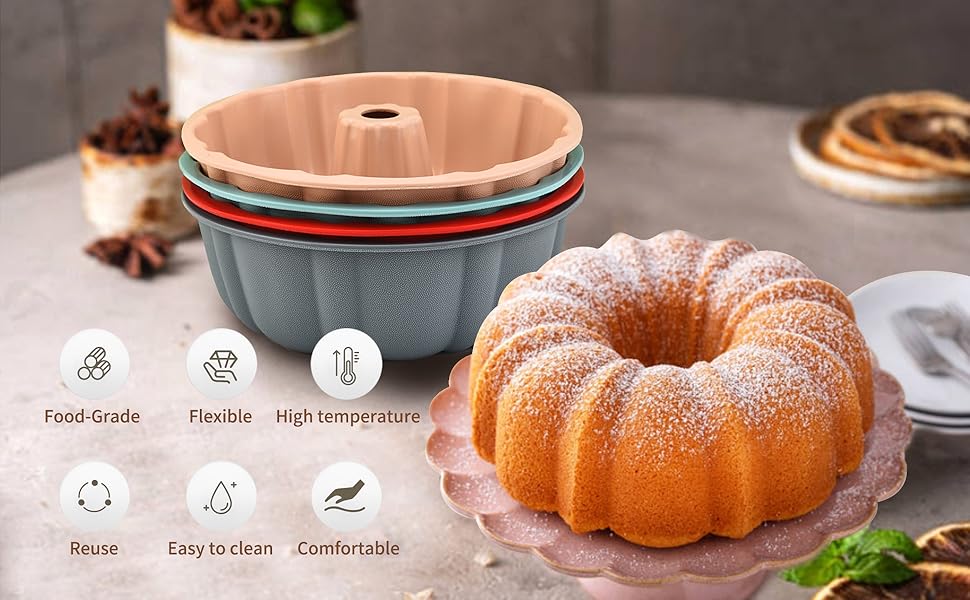
❓ Can it be reused?
Silicone molds are not only safe and reliable, but also have excellent reusability and are extremely cost-effective. Under normal use and reasonable maintenance, the service life of silicone molds is quite long. Generally speaking, high-quality silicone molds can be reused dozens or even hundreds of times. This is because silicone has good chemical stability and physical properties, and is not easily affected by daily use and cleaning and aged, deformed or damaged. For example, due to its structure and material characteristics, during the production process, the materials and products of liquid silicone molds will not cause obvious wear to the molds, and its life span can reach 500,000-2 million times. Even ordinary silicone molds for baking can accompany you through many happy baking times as long as they are used and maintained in the correct way, saving you a lot of money on purchasing molds.
Summary
Through the previous discussion, we can clearly conclude that silicone molds can be used directly for baking, and they have many advantages that traditional molds cannot match, such as excellent high temperature resistance, excellent flexibility, diverse design, and good cleaning convenience. At the same time, they are safe, reliable, and reusable, making them an ideal choice for baking enthusiasts.
If you are still worried about the various problems of traditional molds, you might as well try silicone molds boldly. I believe it will bring you a new baking experience, making your baking process easier and more enjoyable, and your baking works more perfect and outstanding.


